
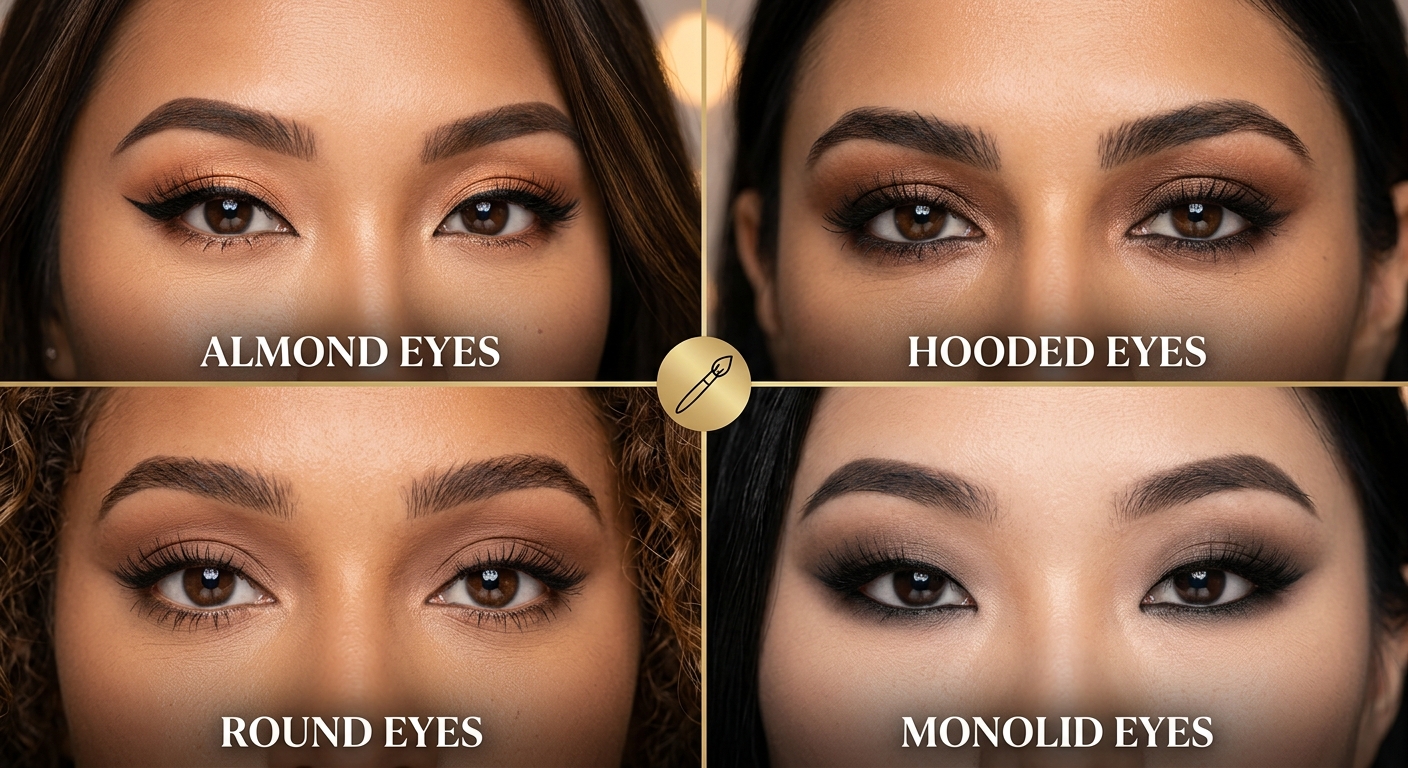
How to Choose Eye Makeup That Suits Your Eye Shape and Features
A wing can look perfect with your eyes closed, then disappear the moment you look up. That does not mean you lack makeup skills. It usually means the placement needs a small adjustment. Your visible lid space, crease placement, and eye spacing offer useful clues about where liner, shadow, and mascara will show. Start with those details, then let your taste decide the finish. Eye makeup can feel polished, playful, dramatic, or barely there without following a single ideal shape.
Your Placement Starting Point: Check your eyes while looking straight ahead with your face relaxed. Keep liner slim where visible lid space is limited. Place transition shadow where you can see it above a fold. Shift lash emphasis toward the center for a rounded effect or toward the outer third for length. Treat eye spacing as an optional styling cue. Your comfort, preferred mood, and available time deserve more influence than any beauty rule.
Read Your Features With Your Eyes Open
Begin at a mirror in soft, even light. Keep your chin level and relax your eyebrows. Raising them can expose extra lid space, which changes the surface you are planning around. Look straight ahead before tilting your head to apply anything.
Notice how much mobile lid you can see between your upper lashes and crease. Then check where the skin folds when your eyes are open. You may have a distinct crease, a partly covered crease, several folds, or no clearly visible crease. Each gives you a different canvas.
Shape labels can help describe a look, but they rarely tell the whole story. Two people with hooded eyes may have different amounts of lid space and different outer corners. Your own eyes may also differ slightly from each other. Aim for a balanced impression with your eyes open. Matching every brushstroke is optional.
Let Visible Lid Space Guide Your Eyeliner
Eyeliner takes up visual space. A thick line can become the main feature when little lid remains visible above it. If you want your shadow to show, start with a narrow line along the upper lashes. Add thickness gradually while checking straight ahead.
Keep Limited Lid Space Flexible
For a subtle result, press a soft pencil close to the upper lash roots on the skin side. Use short strokes instead of trying to draw one continuous line. A small brush can soften the edge before the pencil sets.
If you want a wing, sketch its direction with your eye open. Begin at the outer corner and keep the first version small. A wing drawn across a fold may need an unusual outline when your eye is closed to appear smooth when it is open. Judge the finished effect from your normal viewing angle.
Use More Lid Space Intentionally
With more visible lid, you have room to try a thicker line, a blurred pencil edge, or a graphic shape. You can also keep the liner fine and let shadow carry the look. Extra space gives you options. It does not create an obligation to fill it.
Consider the balance between upper and lower liner. A dark line all around the eye creates a more enclosed effect. Leaving part of the lower lash line bare can feel lighter. Neither finish is a correction. Choose the one that fits the expression you want.
Place Eyeshadow Around Your Actual Crease
The crease is a useful reference point, but it does not have to dictate every shadow placement. What matters is whether the color appears where you want it when your eyes are open.
Bring Transition Color Into View
If your crease disappears beneath a fold, try placing a small amount of matte shadow slightly above it. Keep your eyes open as you mark the position. Then blend the upper edge with a light touch. This lets a little color remain visible without covering the entire area beneath the brow.
Start with less shadow than you think you need. A narrow brush gives more control around a low crease or a small gap between the fold and eyebrow. Pause between layers. Blending farther upward at every step can spread the color beyond your intended shape.
Build a Gradient Without a Defined Crease
A visible crease is not required for a blended eye look. You can place the deepest shade near the upper lashes, a medium shade just above it, and a softer wash toward the brow. Let the colors fade gradually.
For eyes with a prominent crease or deep natural shadow, try a light or medium shade across the mobile lid first. Add depth only where you want more definition. You may prefer a soft outer corner to a dark arc through the entire crease.
Use Proportion Tools as Optional References
After looking at your features in a mirror, you may feel curious about facial proportion tools. An AI looksmaxxing analyzer can be an optional way to consider proportions before trying different makeup looks. Treat any output as a prompt for experimentation. Personal preference deserves more weight than beauty scores, rankings, or suggested ideals.
A photograph also gives you a limited view. Camera distance, lighting, expression, and head angle can change how your eyes appear. A measurement from one image should not become a fixed judgment about your face.
Before uploading a photo, check how a service handles storage, deletion, and reuse. Use your own image, and get clear permission before submitting anyone else’s. If appearance scoring makes you feel more critical of yourself, skip it. A mirror and a few small makeup trials can provide all the guidance you need.
Use Eye Spacing to Choose a Visual Emphasis
Eye spacing can help you decide where to place contrast. It does not tell you whether your face needs changing. Rather than measuring against a strict standard, notice whether you enjoy more definition near the inner corners, through the center, or toward the outer edges.
Move Attention Outward for a Longer Effect
If you want more outward emphasis, keep the inner lid relatively soft and build color through the outer third. A short wing and slightly stronger outer lashes can support that direction. Blend the shadow toward your chosen endpoint in small steps.
You do not need a bright inner corner to complete this look. A shade close to your skin tone can keep that area quiet while the outer detail holds attention.
Bring Attention Inward With Gentle Definition
If you prefer more emphasis toward the nose, carry a medium shadow a little farther across the inner lid. Keep the edge diffused. You can also maintain a more even liner thickness instead of extending a long outer wing.
Very dark inner corners can feel heavy, depending on the look. Try a muted brown, taupe, plum, or another shade you enjoy before committing to a stronger contrast. Assess the result from conversational distance.
Choose Lash Emphasis to Match the Shape You Want
Lashes change the outline of an eye look even when the shadow stays the same. For a rounder impression, concentrate mascara through the center of the upper lashes. Brush them upward and separate any clumps before adding another coat.
For a longer impression, direct more attention toward the outer third. Brush those lashes gently outward. If your outer lashes point downward, heavy product at their tips may work against the lifted effect you want. Try concentrating mascara just before the farthest corner instead.
False lash placement follows the same visual logic. A small cluster near the center creates a different silhouette from one placed toward the outer edge. Start with a modest length so you can judge the placement clearly. Longer lashes are not automatically a better match.
Lower mascara is another adjustable detail. A light coat through the center can echo a rounded upper lash shape. Leaving the lower lashes bare can keep attention on the upper lid. Test both before deciding that either belongs in your everyday routine.
Test One Placement Change at a Time
You will learn more from a controlled adjustment than from changing every product at once. Use a familiar shade and a simple base look. Follow this sequence when you have a few minutes to experiment.
-
Choose your intended effect. Decide whether you want a softer outline, a rounded appearance, a longer shape, or more visible shadow.
-
Adjust one detail. Change the wing angle, transition shade height, or mascara emphasis. Keep the remaining steps familiar.
-
Check with your face relaxed. Look straight ahead, blink, and turn slightly. Notice whether the placement stays visible and feels comfortable.
-
Review from a normal distance. Step back from the mirror. Decide whether you enjoy the overall result before refining tiny edges.
If you take reference photos, use similar lighting and camera distance each time. Keep filters off when comparing placement. Save the photos privately if they are only for your own practice. There is no need to turn every experiment into public content.
Adapt Online Looks to Your Everyday Face
A close crop can make an elaborate shadow blend seem more wearable than it feels in person. Strong lighting can also make shimmer and dark liner appear different. Use online tutorials for ideas, then adjust the scale to your lid space and daily setting.
Copy the feature you enjoy most. That might be a softly blurred wing, a bright center lid, or separated lashes. You can leave the other steps behind. A technique becomes useful when it suits your hands, your time, and your preferred finish.
Keep comfort part of the process. Apply makeup with clean tools and avoid sharing eye products. Stop using a product if it causes discomfort. You do not need to tolerate an unpleasant formula to achieve a particular shape.
Make Your Next Look Feel Like Yours
Your lid space helps you choose liner thickness. Your crease helps you position visible shadow. Your eye spacing offers ideas for where to concentrate detail. Lash placement adds another way to shift the finished silhouette.
Use those observations as starting points. Try a smaller wing, move one shade slightly higher, or change where you apply your second coat of mascara. Keep the changes you enjoy. The most useful eye makeup routine is one you can apply comfortably and recognize as your own.
 james
 Lina